Carbon credits fall into two broad families. Avoidance credits pay for emissions that did not happen, such as a forest that was not cleared. Removal credits pay for carbon that has been taken out of the atmosphere and stored. Both can be useful, but they are not interchangeable, and buyers who treat them as the same product often misjudge what they are paying for. This explainer sets out the difference, why durability and baselines matter, and what it means for projects in Africa.
Avoidance: Preventing Emissions
Most credits issued from African projects so far are avoidance credits. REDD+ projects protect forests that would otherwise be cleared, improved cookstove projects reduce wood fuel use, and many rangeland and agroforestry schemes cut emissions relative to a baseline. The credit represents the difference between what happened and what would have happened without the project. That difference cannot be measured directly, so it is estimated against a counterfactual baseline, which is why baseline setting is one of the most debated parts of any avoidance project. Our explainer on how REDD+ works covers the baseline logic in detail.
Removals: Taking Carbon Out of the Air
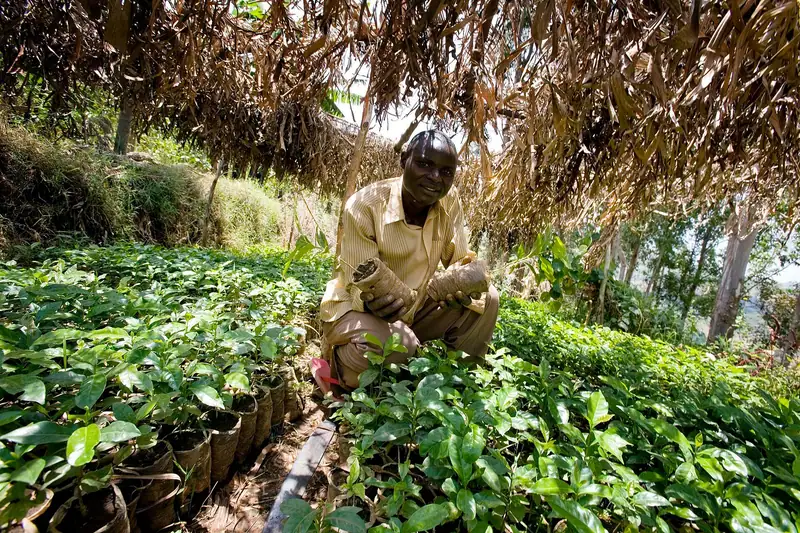
Removal credits pay for carbon that has been drawn from the atmosphere and held in a stable form. Reforestation and afforestation on degraded land are the most established examples. Biochar, produced by heating biomass with little or no oxygen and then applying the resulting charcoal to soil, is a newer route attracting interest in farming regions. Enhanced rock weathering and direct air capture follow the same logic with different technologies, and are generally more expensive. For buyers, a removal is a more direct claim: carbon that was in the air is now in the ground or in a durable product.
Durability Is the Central Question
A tonne of avoided emissions is only as secure as the forest, soil or wetland that prevents it. Fire, drought, pests or a change in land use can release stored carbon after a credit has been issued. Verra's VCS addresses this with a buffer pool, a share of credits held back to cover reversals, sized through a non-permanence risk assessment. Removals raise a related question in a different form. Biochar and geological storage can hold carbon for very long periods, often centuries under many conditions, but the exact figure depends on the material, the soil and the temperature at which it was produced. Buyers should ask how long the stored carbon is expected to remain, and who carries the risk if it does not.
What This Means for African Projects
Africa's carbon potential is often described in terms of forests, and the continent's large avoidance pipeline reflects that. Removals are also relevant. Degraded land across the Sahel, the East African highlands and parts of southern Africa offers room for reforestation and agroforestry. Crop residues and wood waste from farming and processing can feed biochar production, which may suit regions where that material is currently burned or left to rot. Our biochar explainer covers how those credits are earned and checked. Each route needs clear land rights, reliable monitoring and an identified buyer, and each carries different costs and risks.
Why Prices Differ
Removal credits generally trade at a higher price than avoidance credits, because the storage is more direct and the risk of reversal is easier to explain. A higher price does not make removals the better choice for every buyer or project. Removal projects need more upfront capital, longer development periods and more demanding measurement. Avoidance projects can generate revenue sooner, but their baselines face closer scrutiny. Buyers building a portfolio often hold both, using removals to address residual emissions and avoidance credits for near-term reductions.
Questions to Ask Before Buying
- Is this an avoidance credit or a removal credit, and is that stated on the certificate or registry record?
- What baseline was used, and was it independently reviewed?
- How is reversal risk handled, through a buffer pool, insurance or another mechanism?
- How long is the carbon expected to stay stored, and how is that measured?
- Which registry or certifier issued the credit, and can the record be checked publicly?
Frequently Asked Questions
Is a removal credit better than an avoidance credit?
Not automatically. A removal is more direct, but its value depends on how long the carbon stays stored and how the project is verified. A well-run avoidance project in a threatened forest can be a sound purchase.
Do removals and avoidance count the same toward a net-zero target?
Targets and standards differ, so buyers should check the rules that apply to their own reporting. Several frameworks treat removals as a separate category from emission reductions, and the two should be disclosed separately.
Can biochar be used on African farms?
It can, where feedstock is available and the process is run safely with suitable equipment. Its effect on soil and its carbon accounting depend on local conditions, so project-level data matter more than general claims.