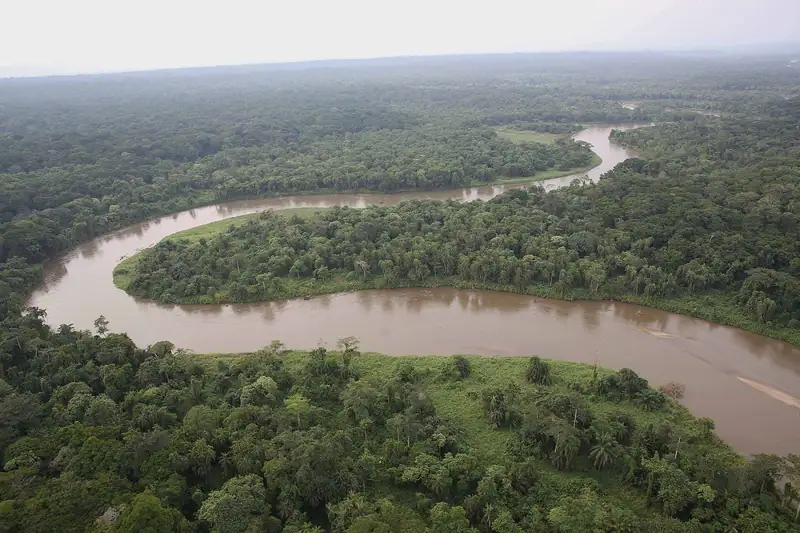
Deforestation in Africa is driven by a mix of pressures: clearing for subsistence and commercial agriculture, charcoal and fuelwood demand, logging and infrastructure. REDD+ — Reducing Emissions from Deforestation and forest Degradation, plus conservation and sustainable management — is the framework that tries to put a value on keeping forests standing. This guide explains how it works and what separates a credible forest protection project from a weak one.
The Basic Idea
Trees hold carbon in their trunks, roots and surrounding soils. When a forest is cleared or burned, much of that carbon returns to the atmosphere as CO2. REDD+ asks a simple question: how much less carbon would be released if this forest were protected, compared with what would probably have happened otherwise? That difference, once measured and independently verified, can be issued as carbon credits. Each credit represents one tonne of CO2-equivalent emissions avoided.
The "plus" in REDD+ covers conservation of existing stocks, sustainable forest management and enhancement of carbon stocks. In practice, many African carbon offset projects combine avoided deforestation with community agroforestry or restoration at the forest edge.
The Baseline: The Hardest Part
Everything in a REDD+ project depends on the baseline, the estimate of what would have happened without the project. Developers look at historical deforestation rates in the surrounding region, the location of roads, towns and farmland, population trends and the legal status of the land. They then project how much forest would be lost in the project area absent protection.
A weak baseline can exaggerate the climate benefit. This is why standards have tightened their methodologies, and why independent auditors scrutinise the reference regions and assumptions. For anyone evaluating carbon credits Africa offers, the baseline is the first question to ask.
Leakage: When Pressure Moves Elsewhere
Protecting one patch of forest can push clearing to a neighbouring area. This is called leakage. Credible projects measure it, deduct for it, and reduce it at the source by addressing why clearing happens in the first place: offering alternative livelihoods, improving farming yields, supplying efficient cookstoves to reduce charcoal demand, and supporting secure land tenure.
Permanence and Risk
Forests can be lost to fire, drought, conflict or later policy change. Carbon market standards address this through buffer pools: a share of credits from every project is set aside as insurance against reversals. Long-term monitoring, using satellite imagery and field plots, helps detect problems early and keeps the project accountable over decades.
Communities at the Centre
Forest protection in Africa succeeds only where people living near the forest benefit from it. Free, prior and informed consent, clear benefit-sharing arrangements and local employment are central to project design. Where communities hold customary rights, those rights need to be recognised in writing before any project begins. Projects that skip this step tend to struggle with illegal clearing and disputes.
Jurisdictional and Project Approaches
REDD+ can operate at two scales. Project-level activities cover a defined forest area under a private or community developer. Jurisdictional programmes cover an entire province or country, with the government accounting for results at the national level. Many countries are moving toward nested systems, where projects are reconciled with national forest accounts so that the same avoided emissions are not counted twice.
Methodology version matters as much as the project type. In November 2024 the Integrity Council for the Voluntary Carbon Market (ICVCM) approved Verra's VM0048 REDD+ methodology and its Jurisdictional and Nested REDD+ (JNR) Framework for Core Carbon Principles labelling, while older REDD+ methodologies, including VM0007, were not assessed and cannot receive the label. VM0048 also changes how baselines are set, using jurisdictional deforestation data and a deforestation risk assessment rather than self-selected reference areas. When you review a forest project, check which methodology version it was registered under and whether it has moved to the current one. The ICVCM decision and Verra's VM0048 page set out the current rules.
Questions to Ask About Any Forest Project
- How was the baseline set, and has it been independently reviewed?
- How is leakage measured and addressed?
- What buffer and monitoring arrangements protect against reversal?
- Do local communities hold rights and share in benefits, and is this documented?
- Is the project aligned with national forest and climate policy?
Why It Matters
Africa holds some of the world's largest tropical forests, including much of the Congo Basin, as well as woodlands and mangroves that store large amounts of carbon and shelter exceptional biodiversity. Protecting them delivers benefits far beyond carbon: stable rainfall, water supply, soil protection and livelihoods. REDD+ is not a complete answer to deforestation Africa faces, and it works best alongside governance, enforcement and rural development. Well-designed, it gives forest protection a long-term source of finance.
Frequently Asked Questions
Is a REDD+ credit the same as carbon removed from the air?
Not quite. A REDD+ credit represents emissions avoided compared with a baseline, not carbon pulled out of the atmosphere. Buyers who want removals look at different project types, such as reforestation or direct air capture, and should not assume a protection credit carries the same permanence profile.
What happens if a protected forest burns after credits have been sold?
This is what buffer pools are for. A share of each project's credits is withheld according to its assessed risk, and those reserve credits can be cancelled to cover a reversal. The exact rules depend on the standard, so buyers should check the buffer calculation and reversal procedure in the project documents.
Can one project stop deforestation across a whole region?
Rarely on its own. A project protects a defined area, and its effect on the wider landscape depends on leakage controls and on the land-use policies that apply nearby. This is one reason jurisdictional programmes and nested systems are gaining attention.