Soil holds some of the largest carbon stocks in African landscapes, from the grasslands of the Sahel to the mangrove fringes of East Africa. It is also the carbon pool that projects find hardest to measure. This explainer covers why soil carbon matters for credits, how it is measured, where it appears in African projects, and what buyers should ask before paying for a soil-based claim.
Why Soil Carbon Is Hard to Count
Carbon in a landscape sits in several places: woody biomass in trees and shrubs, grass and litter on the surface, and organic matter in the soil. Woody biomass is the easiest to measure, and soil can hold the largest and most stable share. Soil carbon also changes slowly and varies from one spot to the next, so a single sample says little about a whole project area. A project that assumes soil carbon without measuring it can overstate what it delivers.
How Soil Carbon Is Measured
Soil organic carbon is normally measured by taking samples at defined points and depths and analysing them in a laboratory. Models are then used to estimate values between sampling points. The design of the sampling plan, including how many samples are taken, where they are placed and how often the plan is repeated, decides how much confidence a buyer can place in the result.
Where Soil Carbon Appears in African Projects
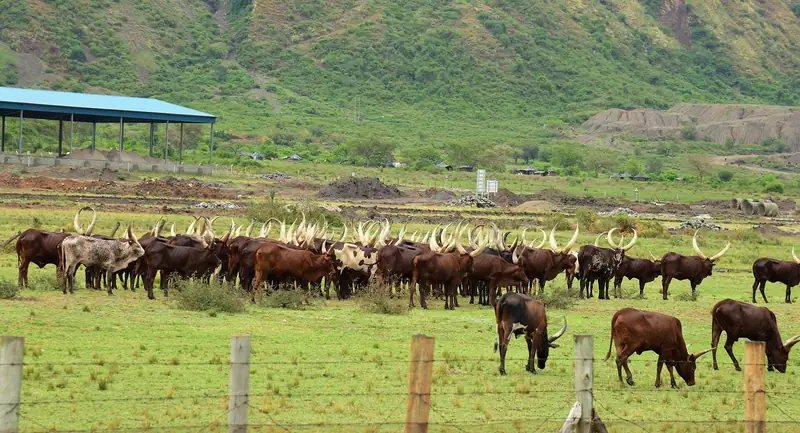
Soil carbon is central to several project types. In mangroves, waterlogged soils slow decomposition, so organic carbon builds up over long periods. Our blue carbon article explains why disturbing these soils releases carbon that took centuries to accumulate. In agroforestry, the soil component is real but is often left out of credit calculations because it is harder to measure. In rangelands, grazing management is the main lever. Better management may raise soil carbon over time, although the effect depends heavily on rainfall and soil type.
Biochar and Other Soil Routes
Biochar, produced by heating biomass with little or no oxygen and applying the resulting charcoal to soil, is a newer route attracting interest in farming regions. Its effect on soil and its carbon accounting depend on local conditions, feedstock and how it is applied, so project-level data matter more than general claims.
Permanence Is the Weak Point
Soil carbon can be lost quickly. Soil and grass carbon can be lost in a single poor fire season or drought, and disturbing a wetland or grassland can release stored carbon after credits have been issued. Verra's VCS addresses reversal risk with a buffer pool, a share of credits held back to cover losses and sized through a non-permanence risk assessment. Buyers should check the size of that buffer and how it was set, rather than assume soil carbon is permanent.
Questions to Ask Before Buying
- Which carbon pools does the project count, and is soil carbon measured or assumed?
- How many samples were taken, at what depths, and who analysed them?
- How is soil carbon estimated between sampling points, and how often is the plan repeated?
- What buffer applies, and what happens if a fire, drought or land-use change reverses the gains?
- Who holds tenure over the land, and are the people who use it part of the benefit arrangement?
Why It Matters for Africa
Africa's grasslands, savannas and wetlands cover large areas and support pastoralists, farmers and wildlife. Carbon finance that includes soil can reward better land management, but only if soil is measured with the same care as trees.
Frequently Asked Questions
Can satellites measure soil carbon for a project?
Not reliably at project scale. Satellites help track vegetation over time, but soil carbon is normally measured by sampling and laboratory analysis, with models estimating values between samples.
Is soil carbon always counted in a carbon project?
No. Many methodologies count only some carbon pools. Buyers should check which pools are included and whether soil carbon is measured, modelled or left out.
Is soil carbon a durable removal?
Not necessarily. Soil carbon can be lost after fire, drought or land-use change, so its durability depends on management, monitoring and the buffer that protects buyers against reversal.
Why do soil measurements need repeating over several years?
Soil carbon changes slowly, so a change may be too small to detect in a single season. Repeat sampling at the same points and depths, spaced far enough apart for real change to show above measurement noise, is what lets a project show whether its land management is working. Buyers should ask how far apart the repeat measurements are scheduled.
How should buyers read the uncertainty in a soil carbon estimate?
Soil estimates always carry a margin of error, because samples cover only a small part of the project area. Ask whether the project reports that margin, whether the claimed gain is larger than the margin, and how the methodology treats uncertainty when credits are calculated. A claimed change that sits inside the margin of error is weak evidence of real carbon gain.