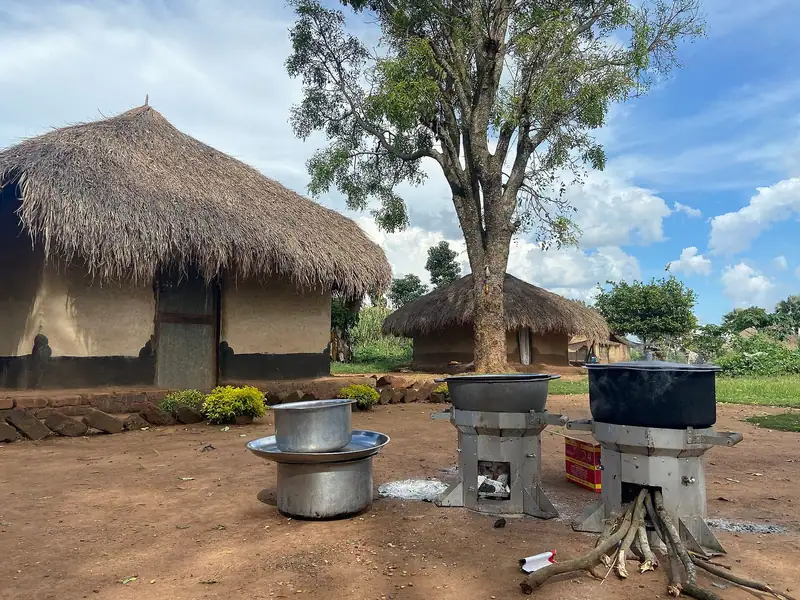
More than two billion people worldwide still cook over open fires or basic stoves that burn wood, charcoal, dung or crop residues, and most of them live in sub-Saharan Africa. Clean cooking carbon projects turn that gap into a source of finance: households receive improved stoves, the fuel they save is measured, and the resulting emission reductions can be sold as carbon credits. This explainer covers how those credits are calculated, what buyers should ask, and where the weak points lie.
Why Cooking Is a Carbon Question
A household stove is a small source of emissions, but across millions of households the total is large. Wood and charcoal burned in inefficient stoves release CO2, and when the fuel comes from forests that are not regrowing, the carbon effect compounds. Improved cookstoves burn less fuel for the same cooking task, which reduces both emissions and pressure on local woodlands. The same stove also cuts smoke inside the home, which is why health and climate benefits are usually presented together.
How a Stove Credit Is Calculated
Every cookstove project starts with a baseline: what households would have used without the project. In most African settings that is a three-stone open fire or a traditional charcoal stove. The project then measures how much fuel a household uses with the improved stove and compares the two. The difference, multiplied by an emission factor for the fuel, gives the reduction in CO2-equivalent emissions.
A further adjustment applies to woodfuel. Methodologies typically discount savings by the share of harvested wood that would have come from non-renewable sources, often expressed as the fraction of non-renewable biomass. If the wood saved was regrowing sustainably, fewer credits are issued. This is a sensitive input, because a higher assumed fraction produces more credits, so buyers should check how it was estimated and whether local data supports it.
Deemed Savings or Metered Use
Projects estimate fuel savings in two broad ways. Deemed-savings approaches apply a standard assumed saving per stove, based on laboratory tests and surveys. They are cheaper to run but depend heavily on assumptions about how often stoves are actually used. Metered approaches fit sensors to stoves or use field kitchen performance tests to measure real use over time. They cost more but give a stronger evidence base, and buyers focused on credit quality tend to prefer them.
The Co-Benefits Buyers Ask About
Improved stoves reduce smoke inside homes. The World Health Organization estimates that household air pollution from cooking with solid fuels contributes to millions of premature deaths each year, with women and young children the most exposed. Users also gain time previously spent collecting fuel and can spend less on charcoal or firewood. Projects that measure and report these outcomes can strengthen their case with buyers who have development or health commitments, although these benefits are not carbon credits in themselves.
Where Projects Go Wrong
Three weaknesses come up repeatedly. The first is stove use: a stove that is sold and then abandoned, broken or used only on special occasions saves little fuel, yet can still generate credits if monitoring is weak. The second is fuel switching: when households move from wood to LPG or electricity, the emissions profile changes, and the project must account for the new fuel and any supply-chain effects. The third is resale. Stoves sold on to households outside the project boundary can create double counting if another programme also claims them.
Standards have tightened as evidence on real-world use has grown, and many methodologies now require follow-up surveys, stove-use monitoring and periodic revalidation. Credibility depends on whether those requirements are applied in practice.
Questions to Ask Before Buying
- Which baseline stove and fuel does the project use, and how was that verified?
- Are savings deemed or metered, and how often is stove use measured?
- How is the non-renewable biomass fraction estimated, and does local data support it?
- What happens to stoves that break or are resold?
- Is the project registered under a standard that is currently applicable, and has its methodology been revised?
Why It Matters for Africa
Clean cooking is one of the few carbon activities that reaches the household directly. Where it works well, it reduces emissions, improves health and frees up time, often at the same time. Credit revenue is what keeps a stove programme financed, so the quality of the credit and the quality of the cooking outcome must be assessed together. For buyers, the question is not only how many tonnes a project claims, but whether the stoves are in kitchens and being used.
Frequently Asked Questions
Are cookstove credits the same as health benefits?
No. Carbon credits pay for measured or estimated reductions in CO2-equivalent emissions. Less smoke, time saved and health gains are real co-benefits, and some buyers value them, but they are not counted as tonnes of carbon.
Why does the baseline matter so much?
The baseline sets what the project is credited against. A baseline that assumes households would otherwise have used a very inefficient fire, or that overstates the wood they burned, produces more credits than the stove actually saves. Checking the baseline fuel, the stove test data and the non-renewable biomass fraction is usually the fastest way to judge a project.
Does a stove in a home always generate credits?
Not automatically. Credits are issued only for stoves that are verified as installed and in use, under the monitoring rules of the methodology. A stove that is missing, broken or rarely used should not generate credits, and buyers should ask how often the project checks this.
What is the difference between deemed and metered savings?
Deemed-savings approaches apply a standard assumed saving per stove, based on laboratory tests and surveys. They are cheaper to run but rely on assumptions about how often stoves are used. Metered approaches measure real use over time with sensors or kitchen performance tests, which gives a stronger evidence base.
Which registries record cookstove credits?
Many cookstove credits from African projects are recorded in Verra's registry for the Verified Carbon Standard, while the Gold Standard Impact Registry holds projects certified under its own methodologies. The registry record shows serial numbers and retirements, which buyers should check before relying on a credit.